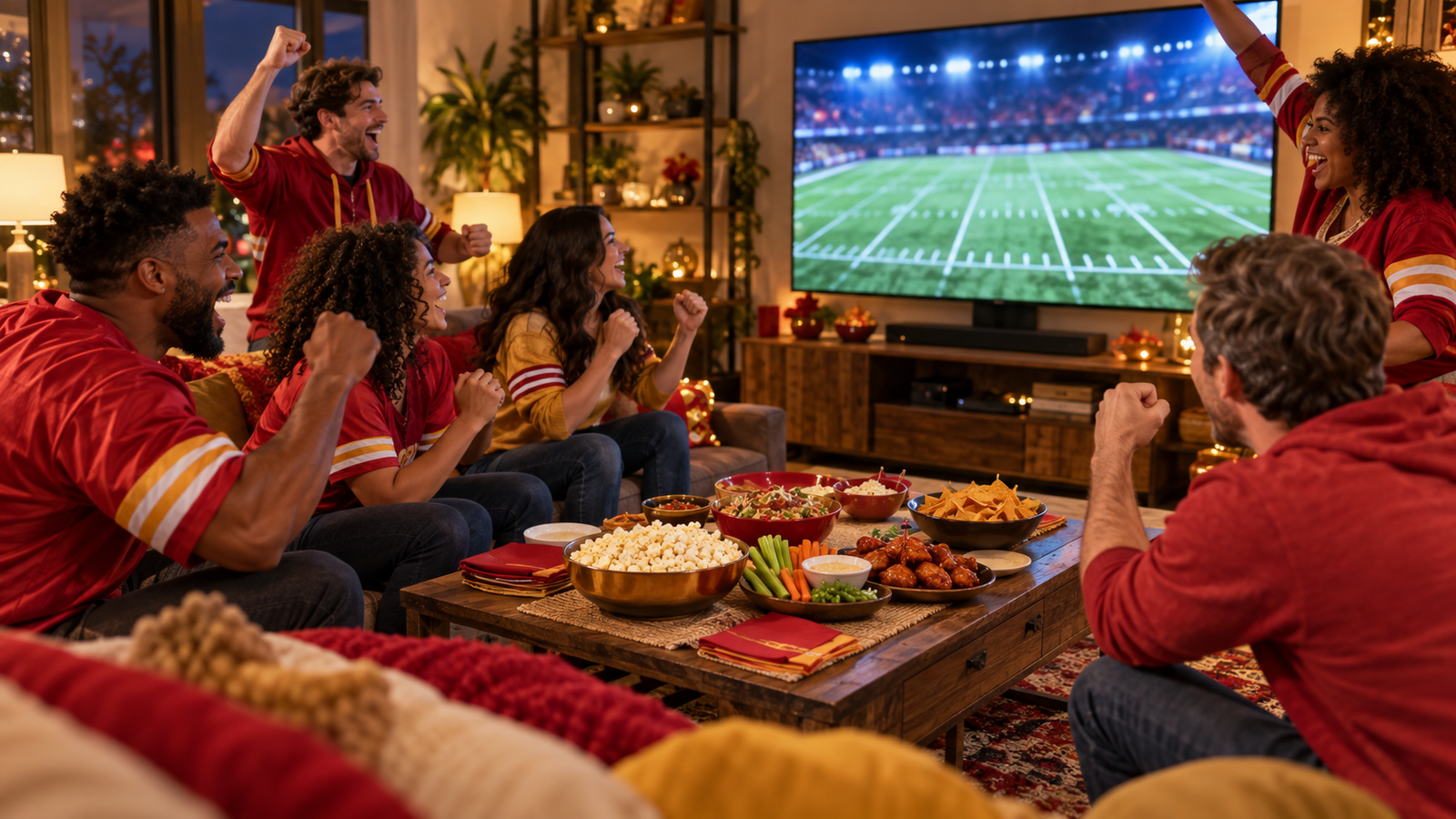
A memorable football watch party depends on more than a large screen and a bowl of snacks. Game day has a long arc: guests arrive, lineups and stories create anticipation, the contest demands attention for several hours, and the result shapes the mood afterward. Thoughtful planning keeps those phases comfortable without turning the host into a full-time event manager.
The most successful gatherings feel energetic but easy. Guests can see the action, find food without blocking the television, follow the game at a comfortable volume, and enjoy conversation during breaks. Whether the group supports one team or arrives with divided loyalties, the goal is to make the competition part of a welcoming shared experience.
Confirm the schedule and viewing setup
Check the official kickoff time, time zone, and broadcast availability close to the event. Sports schedules and channel assignments can change. Test the legal streaming or television service in advance, install any required updates, and sign in before guests arrive. Do not rely on a password reset or subscription decision during the opening drive.
Position the main screen so every seat has a clear view. Sit in each location and check for glare from windows or lamps. If the room is wide, angle extra chairs toward the display rather than building straight rows. A second small screen can show statistics or another game, but competing audio usually creates confusion. The primary broadcast should have a single, reliable sound source.
Design the room around movement
People will stand, refill plates, greet late arrivals, and visit the restroom. Create a walking route that does not cross directly in front of the television. Place food and drinks to the side or behind the main seating area. Protect cables, remove unstable tables, and keep hot appliances away from crowded paths.
Offer different kinds of seating. A sofa is comfortable for a long game, while dining chairs support guests who prefer a firmer seat. Floor cushions can expand capacity for younger viewers. Leave at least one easy-access place near an exit for anyone with limited mobility. Comfort makes people more patient when the game includes long reviews or commercial breaks.
Build a menu that survives four quarters
Choose food that can be prepared early, served in small portions, and eaten without complicated utensils. A practical menu has one substantial item, several finger foods, a fresh option, and something sweet. Label common allergens and keep vegetarian or dietary alternatives separate with dedicated serving tools.
Stagger the food. Put out light snacks during arrival, serve the main dish before kickoff or at halftime, and hold dessert for the later stages. This avoids a table crowded with dishes that become cold or stale. Use smaller trays and refill them from the kitchen so perishable food does not sit at room temperature longer than recommended.
Sports searches sometimes include betting promotions. If an eligible adult considers a third-party service such as Betonklik Login, they should verify that it is legal and appropriately licensed in their location, understand the terms, and never make access to wagering part of the watch party.
Plan drinks for inclusion and control
Water should be visible and easy to reach. Add soft drinks, sparkling water, juice, tea, or coffee so guests have genuine choices. If alcohol is served, provide food, use moderate portions, respect anyone who declines, and arrange safe transportation. The host should never pressure a guest to drink or connect drinking to team loyalty.
Use cups that are easy to identify and place coasters away from electronics. Keep a towel and basic cleaning supplies nearby for spills. A small practical station prevents one accident from interrupting a crucial series.
Give both serious and casual fans a role
Some guests will analyze protection schemes and clock management. Others may know little about football and primarily enjoy the social event. A good host makes room for both. Explain an unusual rule when someone asks, but avoid narrating every play. Share a short pregame overview of the teams, stakes, and a few players to watch.
Low-pressure activities can keep casual viewers engaged. Invite guests to predict the first score, choose a snack most likely to disappear first, or vote on the most exciting play. Keep any contest free or based on trivial prizes. Children can create paper pennants using generic colors, record a simple score chart, or run a quiet tabletop game during slower periods.
Set standards for rivalry
Friendly disagreement adds excitement, but personal attacks do not. Before the game, establish that playful team banter is welcome while insults about identity, appearance, family, or private life are not. Do not let one loud fan dominate the room. If guests support opposing teams, give each side space for celebration without ridicule after a bad play.
Referee decisions are natural sources of debate. Let the broadcast show the replay, then move on. The watch party cannot change the call, and repeated arguments quickly exhaust everyone. Model the tone you want by acknowledging a strong play from either team and accepting the final result.
Use technology as a backup, not a distraction
Charge remote controls and devices, know how to reconnect the stream, and keep the network password available for invited guests. Silence smart-speaker notifications that could reveal a score before a delayed broadcast. If streaming latency is significant, ask guests to avoid live alerts.
A group chat can coordinate arrival and parking, but phones should not replace the gathering. Encourage people to share photos after the game rather than constantly recording others. Always ask before posting an identifiable image of a guest.
Keep betting separate and responsible
Wagering can change a social room by turning ordinary plays into financial outcomes. Never pressure guests to join, collect money informally, or imply that sports knowledge guarantees profit. An adult who chooses to follow a betting link should do so only where lawful, with a fixed entertainment budget and a firm rule against chasing losses.
Be alert to discomfort. If someone becomes preoccupied with an outcome, raises stakes after a loss, or asks to borrow money, pause the activity and offer support. The football game should remain enjoyable regardless of any prediction.
Prepare a smooth finish
Have containers ready for leftovers, provide a visible place for trash and recycling, and check transportation before the final minutes. A close finish may keep everyone seated longer than expected. Afterward, give guests time to react, then lower the volume and begin a gentle transition.
An excellent game-day experience is built from simple systems: a tested broadcast, clear sightlines, safe walking paths, food served in stages, inclusive drinks, and respectful rivalry. Planning those details early frees the host to watch the game too. The score will determine the winner on the field, but a comfortable, welcoming room ensures the gathering succeeds for every fan who walks through the door.